
As Massachusetts expands efforts around housing access and affordability, Accessory Dwelling Units, or ADUs, are increasingly becoming part of the conversation as a meaningful avenue for change. That growing momentum is visible across the state and locally in Boston, where a recently installed full-scale ADU showcase at City Hall Plaza is inviting residents to explore how smaller housing models can support evolving community needs and make housing feel more accessible and attainable.
At the same time, the Healey-Driscoll Administration’s ADU Design Challenge is working to make it easier and more affordable for property owners to move forward with these projects. Together, these efforts reflect a broader shift in how we think about housing — and align closely with ideas Studio Luz has been exploring through our own work.
ADUs offer more than additional housing inventory. They support multigenerational living, create opportunities for aging in place, generate supplemental income for homeowners, and provide an alternative to larger-scale development. They also raise a question that we at Studio Luz find important to explore: how can smaller homes be designed with the same care, creativity, and ambition as any other project?

Studio Luz explored these themes through Bookend House, an ADU developed in Syracuse, New York in partnership with Habitat for Humanity and ReStore Habitat. Designed by Studio Luz Principals & Co-founders Hansy Better Barraza and Anthony Piermarini, alongside Project Designers James Carson Henry II and Eun Joo Kim, Bookend House was built around a central question: why are affordability and design innovation so often treated as opposing ideas?
Affordable housing can become constrained by what is familiar, with innovation too often viewed as a luxury rather than a necessity. Bookend House took a different approach. The project introduced distinct architectural “bookends”: bold façades that gave the homes a strong visual identity and engaged the surrounding neighborhood while maintaining an approachable scale. Passive House standards shaped the building’s performance from the ground up, paired with alternative construction techniques and delivery methods that explored how high-quality design and efficient production could work together.
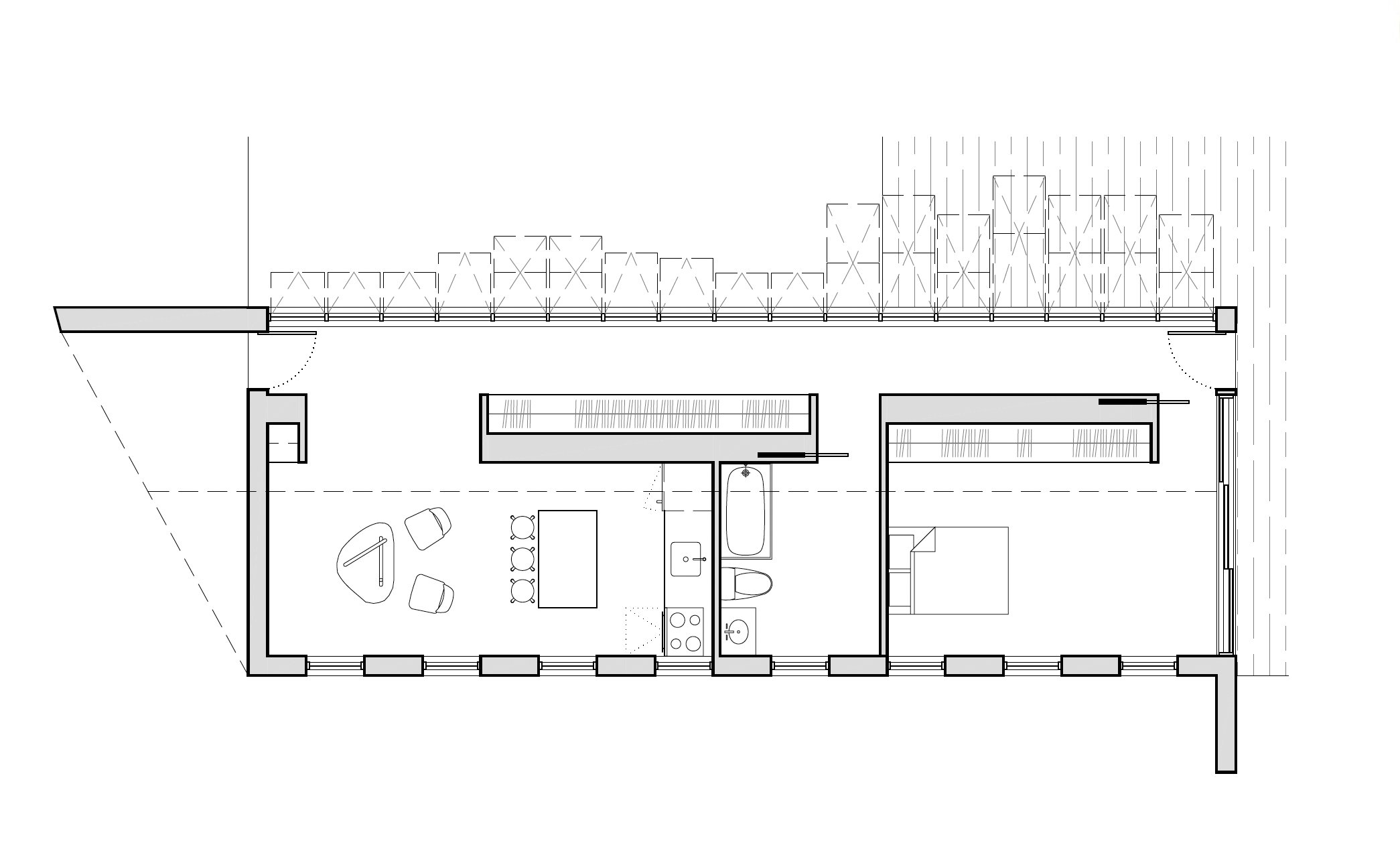
The project’s collaborative structure was equally intentional. Partnering with Habitat for Humanity and ReStore Habitat meant thinking seriously about how community participation and accessible delivery systems could become part of the architecture itself. In this way, Bookend House treated design as a form of advocacy — using housing not just as shelter, but as a vehicle for community engagement and social impact.
Many of the ideas embedded in Bookend House feel increasingly relevant as ADUs gain attention across Massachusetts. How can thoughtful design make a smaller home feel meaningful and well-crafted? How can sustainability be integrated into everyday living rather than treated as an add-on? How can a single unit strengthen the relationship between residents and the broader neighborhood?

For Studio Luz, these aren’t abstract questions. They reflect an ongoing commitment to housing that responds to community needs, supports people at different stages of life, and demonstrates that affordability and design excellence not only can, but should, go hand in hand.
Studio Luz Bookend House Team: Hansy Better Barraza, Anthony Piermarini, James Carson Henry II, Eun Joo Kim