
This year, we’ve been working within Boston’s Dorchester neighborhood on 120–122 Hancock Street to design a 15-unit affordable homeownership development and work towards its creation in collaboration with Urbanica Inc. The project reflects our ongoing commitment to creating thoughtful, community-oriented architecture that strengthens the neighborhoods we serve.
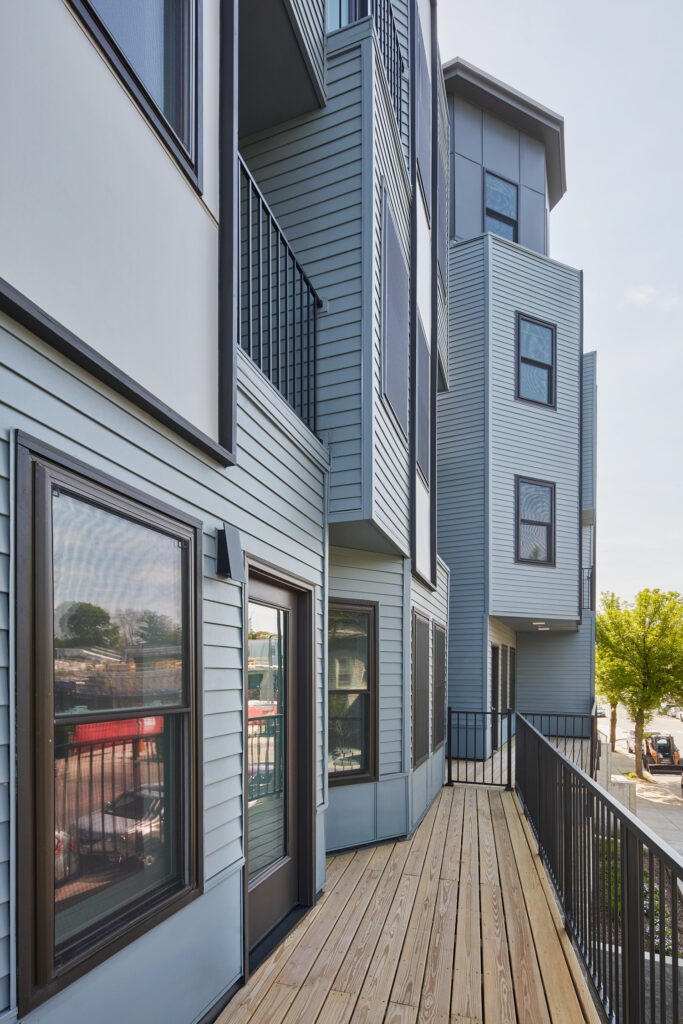
Located along a hillside site, the Hancock Street parcels introduce modern, mid-scale housing that feels at home within the surrounding residential fabric. Inspired by Boston’s classic triple-deckers and bow-front homes, the design reinterprets these familiar forms to bring renewed energy and contemporary expression to the neighborhood. The building takes full advantage of its topography through a terraced strategy, allowing each homeowner access to outdoor space while keeping the massing in harmony with adjacent buildings.

From the outset, the goal was to create housing that is both affordable and architecturally enriching. The 15 units—ranging across a mix of layouts and sizes—are all deed-restricted affordable homeownership opportunities, supporting Boston’s efforts to expand equitable access to housing. By distributing outdoor decks and terraces across multiple levels, the design fosters connection among residents while maintaining privacy and livability. Shared front decks open the building to the street, encouraging a sense of community, while private rear decks provide quiet spaces that look out over the hillside.
A key design move was to break down the overall scale of the structure into a rhythm that echoes the proportions of Dorchester’s recognizable triple-decker buildings. This approach allows the building to read as two smaller, interlocking volumes, creating a visual link between the new construction and the surrounding context. Subtle articulation in the façade, including bay-like projections and varying depths, adds texture and play, nodding to the area’s architectural heritage while embracing a more modern interpretation of form and materiality.


Beyond these design choices, this project echoes our belief that design has the power to shape equitable, inclusive communities. By introducing new, attainable homeownership opportunities within an established neighborhood, the project contributes to a more balanced and sustainable housing ecosystem. As the project nears realization, we look forward to seeing the building come to life, with new homeowners settling into spaces designed to support both individual comfort and collective connection. Read more about this project here.

Studio Luz Project Team: Hansy Better Barraza, Anthony Piermarini, Leena Ismail, Ben Tulman, Ivan Tae, and Jae Hoon Jang
Photography Credit: Jane Messinger