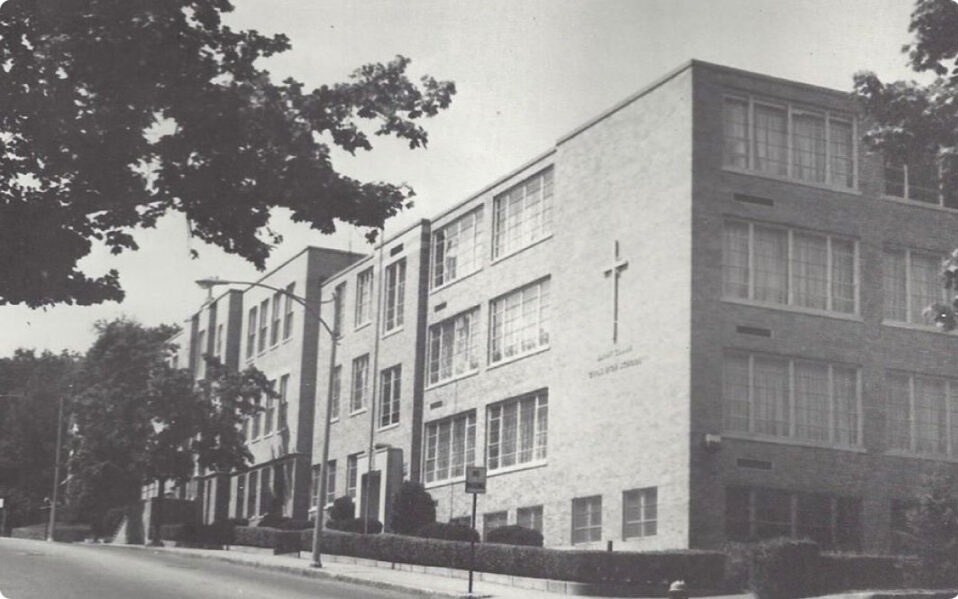
The campus of Brooke Charter School in Roslindale reflects more than a century of history: a main building from 1916, additions built in 1940, 1956, and 1961, and accumulated renovations that addressed immediate needs without always accounting for the whole. By the time Studio Luz was engaged to lead the feasibility study and addition design, Brooke Roslindale had grown into a 62,000-square-foot campus that spanned four parcels and had been adapted many times over.
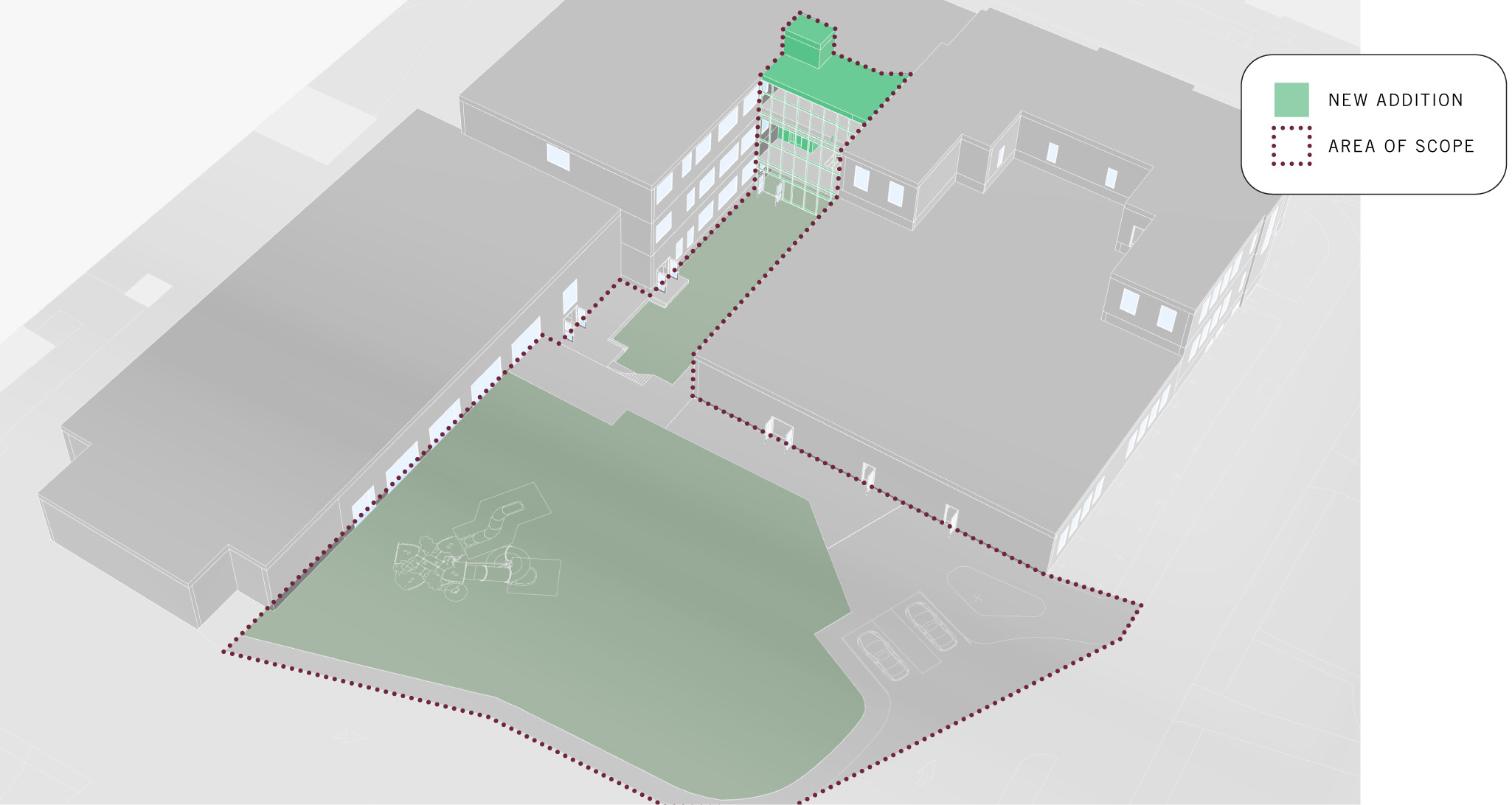
This kind of project asks something specific of any design team: to understand what already exists well enough to improve it, and to determine where improvement is possible. The Studio Luz team set out to improve accessibility across existing educational spaces, provide updates to their playground, and improve overall campus operations, while expanding their footprint with a new 3500 sq. ft. addition that offers additional dedicated space for students and teachers alike.
Starting with accessibility
Studio Luz’s engagement at the school began with the need to make the existing building accessible to all students and staff, unifying across a structure that has undergone decades of additions and modifications.
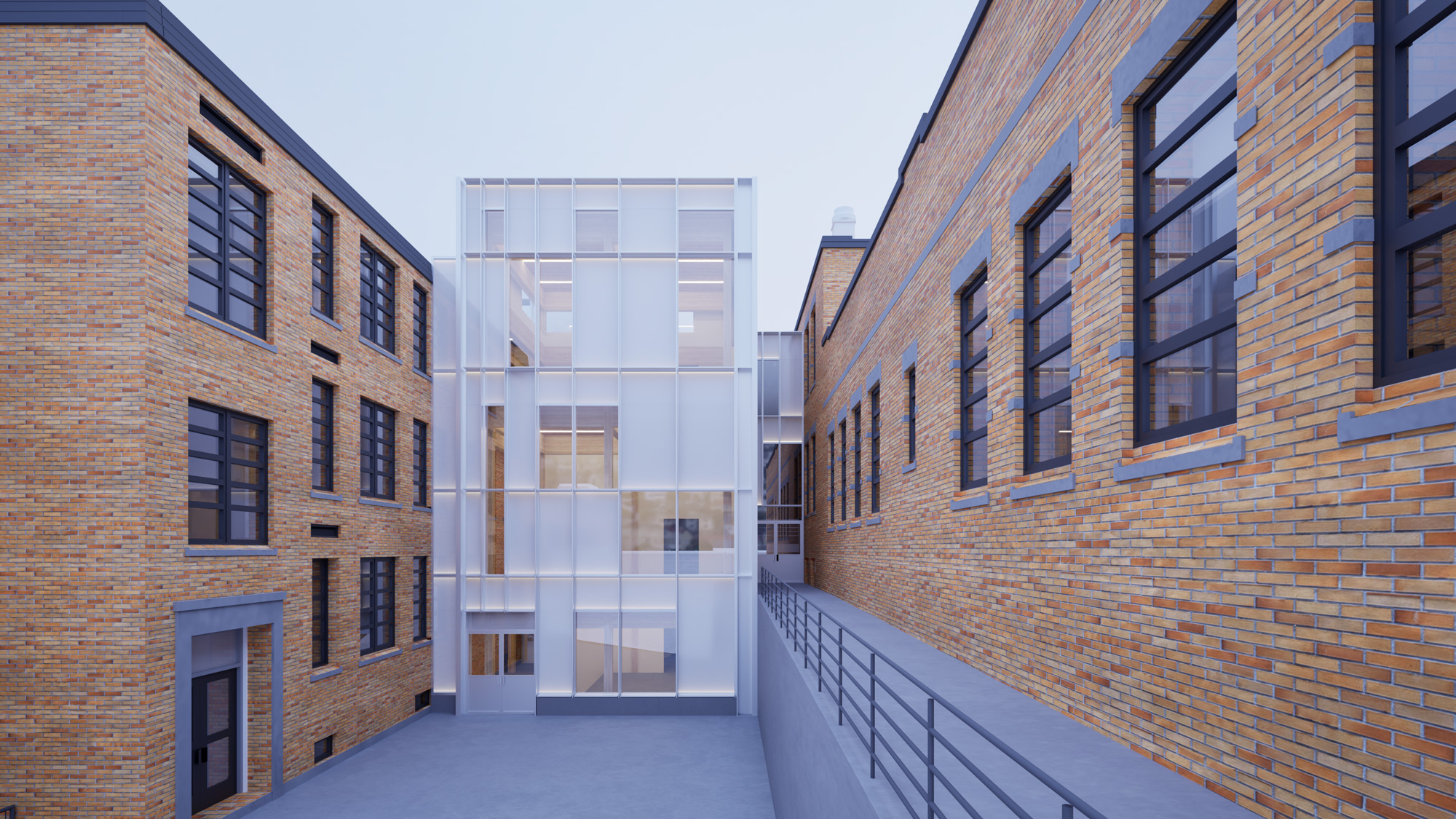
We looked at how people actually move through the building, and identified where the friction was, which spaces were functionally unavailable to students with mobility needs, and where targeted improvements could unlock meaningful change. A new elevator and stair core, located in the courtyard, became one of the primary outcomes: a single intervention that improves vertical circulation, activates an underutilized outdoor space, and creates a more coherent connection across the campus’s ensemble of structures.
When accessibility shapes the design from the start, it tends to surface better solutions. At Brooke, the work of rethinking circulation opened up questions about how the building functioned overall — questions that a narrower scope might not have reached.
Understanding the building
Historic structures don’t always reveal themselves easily. The Brooke campus includes additions from four different decades, each built to the standards and priorities of its time, on a topographically complex site. Working through feasibility meant understanding everything, like which systems were original, which had been updated, where connections were possible, and where earlier modifications had created conditions that needed to be addressed before new work could proceed. This kind of forensic groundwork is time-intensive, but it yields the most accurate picture of what the building actually needs.
A sustainable addition
We introduced a 3,500-square-foot addition, driven by providing an accessible core, and designed to address what the existing building can’t provide: dedicated, flexible space for small-group and individualized learning, built to meet current performance standards and designed to last.
The addition uses cross-laminated timber, a material choice that reflects both a sustainability commitment and a belief that the construction method matters. Mass timber is fast to build with, structurally efficient, and creates environments that feel different from conventional construction. Paired with a high-performance curtain wall system, it brings daylighting deep into the new spaces while improving the building’s overall thermal and acoustic performance. On an active school campus, the speed and reduced disruption of mass timber construction also has real practical value.
The addition is designed to create a more welcoming entry point that improves the campus’s relationship to the street and to the community it serves. Rather than reading as an imposition on a historic building, it’s intended to work alongside the existing structures, honoring the character of what’s there while making clear that the school is invested in its future.

Brooke Charter School has served students in Roslindale for more than two decades, in a building that predates the current school by nearly ninety years. The families who choose Brooke Roslindale — from Dorchester, Hyde Park, Mattapan, East Boston, Chelsea, Roxbury — are choosing a school with a real history in the community it belongs to, and that history is worth preserving.
Project Team: Hansy Better Barraza, Anthony Piermarini, Sarah Pumphrey, Paul Dahlke, Kaitlin Pettenger, Leena Ismail