
The City of South Portland, Maine, is in the midst of an ambitious, community-driven effort to chart its course for the next decade. These comprehensive planning efforts will form the foundation for future policies that enrich the local economy, preserve the city’s character and historic resources, expand opportunities for housing, recreation, and business, and address the urgent challenges posed by climate change.
Studio Luz was engaged by lead consultant JM Goldson and the City of South Portland to provide design assistance and community engagement for two key sites, the Eastern Waterfront and the Crosstown Connector, with the goal of creating cohesive strategies for growth and resiliency. Here, Associate + Community Liaison Sophie Nahrmann shares more about Studio Luz’ involvement in this project, and how taking a flexible and strategic approach while engaging the community helped deliver a successful result.
Community First
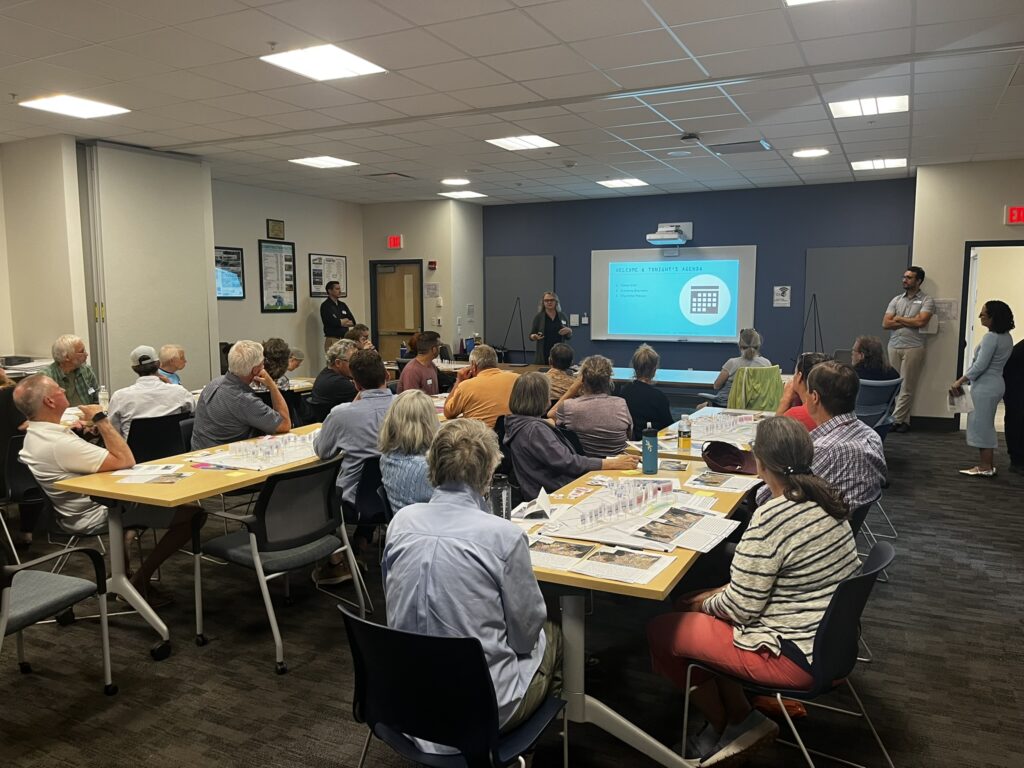
A community knows its area’s needs best. To tap into this knowledge, the Studio Luz team designed active engagement activities that invited residents to envision their ideal future block by block. In facilitated workshops, neighbors debated prompts, built consensus, and sketched ideas that would directly inform design recommendations. “We had many conversations about what a resilient future looks like for our districts,” Sophie says. “In the workshops, we were able to facilitate really wonderful, lively conversations about what the district could ultimately look like, and we managed multiple viewpoints in a way that was very productive.”

A Flexible Approach
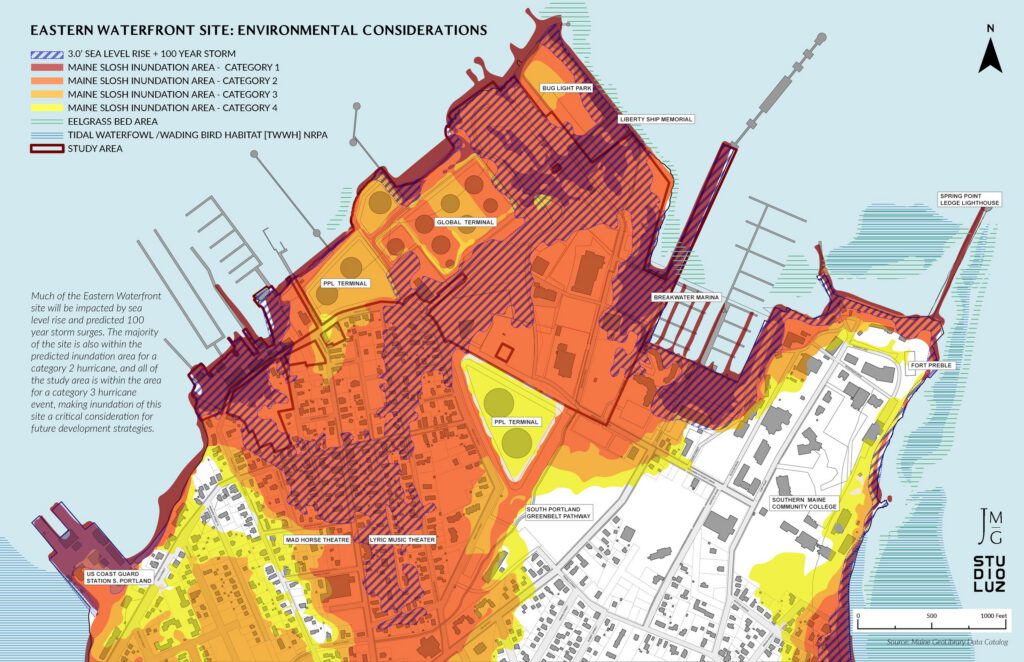
Although our overall strategy remained focused on community over all, there were some ways in which we had to adapt to the needs of different districts. “Although these districts both lie within South Portland, they have very different conditions,” explains Sophie. “For instance, the Eastern Waterfront is greatly impacted by climate resiliency strategies. In that area, we wanted to facilitate conversations about how we could address sea level rise and inundation possibilities, because the risks are pretty intense in some areas.”
While the Eastern Waterfront required a resilience-first strategy, other areas necessitated different considerations. The Crosstown Connector site, for example, included industrial and shipping areas with their own priorities. There, we developed a toolkit the city could use to have direct conversations with building owners about the district’s future.
“Even within the same comprehensive plan, we took a very discrete, location-specific approach,” Sophie explains, “It’s important to adapt community engagement and planning strategies to each site.” This flexibility extended to the engagement methods themselves. Studio Luz used a mix of in-person workshops, open houses, and online surveys, choosing formats based on what each community responded to best.
Planning for Resilience
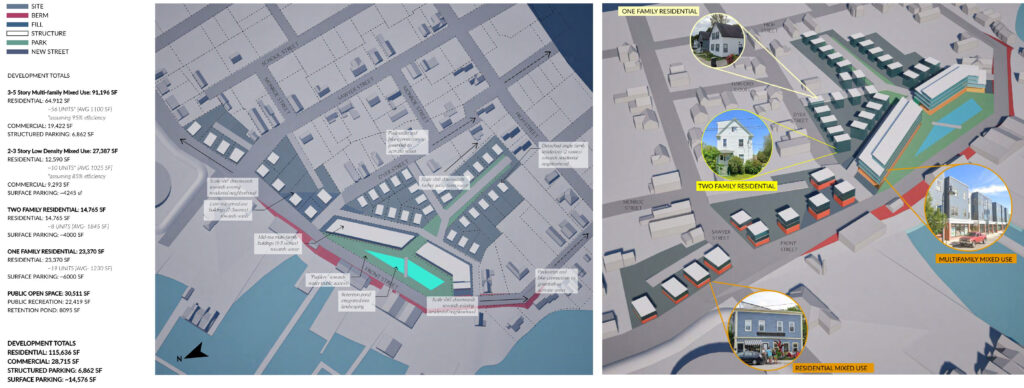
Especially when it came to planning for the Eastern Waterfront, Studio Luz’ recommendations needed to be built to last in the face of climate change. Discussions centered on how the district could adapt to rising seas while supporting a vibrant mix of uses. “We explored options that ranged from street berming to seawall construction, comparing cost and community benefit,” Sophie says. “At the same time we were looking at potential development scenarios, we were also investigating strategies to keep the community safe and the infrastructure intact.”
Studio Luz’s recommendations proposed dynamic, mixed-use areas along Front Street to foster economic activity and pedestrian life, paired with resilient infrastructure like elevated berms and retention ponds to manage flooding. Linear parks and pathways would link the waterfront to the city’s Greenbelt, expanding recreational access while enhancing climate resiliency.

A Blueprint for the Next Decade
The resulting comprehensive vision balances development potential with protective measures, ensuring South Portland’s growth strengthens its economic, social, and environmental fabric and has long-term adaptability. “We’ve done the visioning for the next 10 years,” Sophie says. “Now, the city can take this as the basis for implementation moving forward.”